

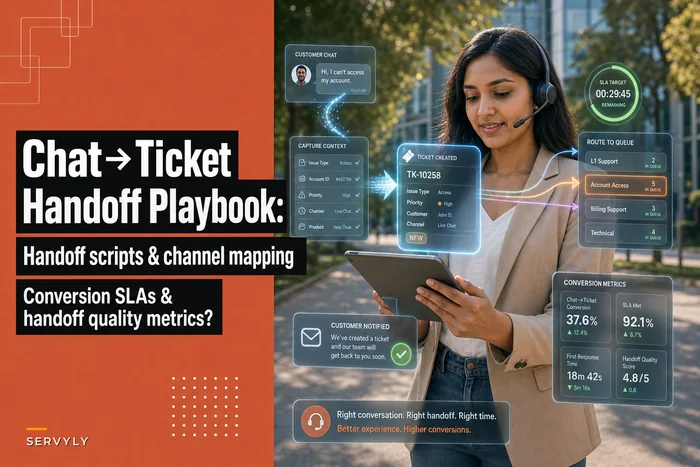
Minimize Chat‑to‑Ticket Friction: Handoff Scripts, Conversion SLAs and Channel Mapping
Channel harmonization playbook: chat-to-ticket mapping, handoff scripts, conversion SLAs and metrics to measure successful synchronous→asynchronous transitions.

Actionable strategies for optimizing customer support workflows, improving ticket resolution, enhancing team productivity, leveraging AI automation, and driving superior service outcomes for help desk professionals.
Channel harmonization playbook: chat-to-ticket mapping, handoff scripts, conversion SLAs and metrics to measure successful synchronous→asynchronous transitions.
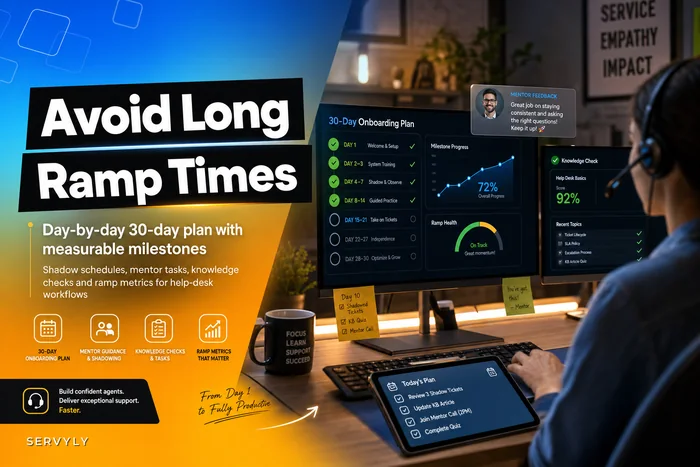
A prescriptive, day-by-day 30-day plan with measurable milestones, shadow schedules, knowledge checks, mentor tasks and ramp metrics tailored to help-desk workflows.
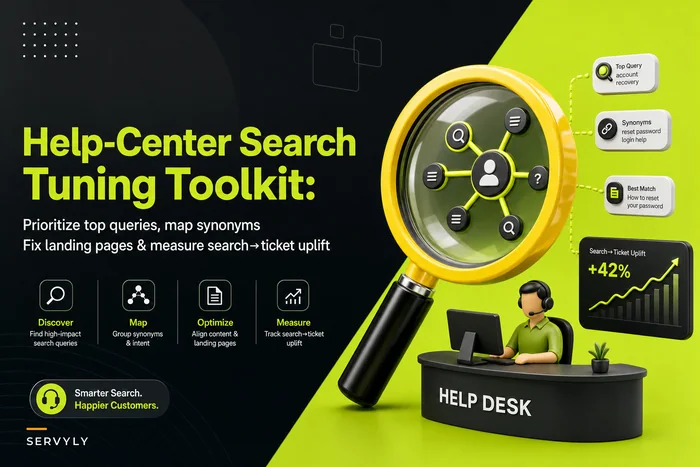
A concrete search-tuning checklist: prioritize top queries, map synonyms, adjust landing pages and measure search→ticket uplift with practical recipes.

A practical, support-specific engineering blueprint: an SLI catalog for support signals, canonical ticket/event schema, validation and retention rules, example event pipelines feeding dashboards and automations, and an ownership model so support teams can trust and act on metrics.
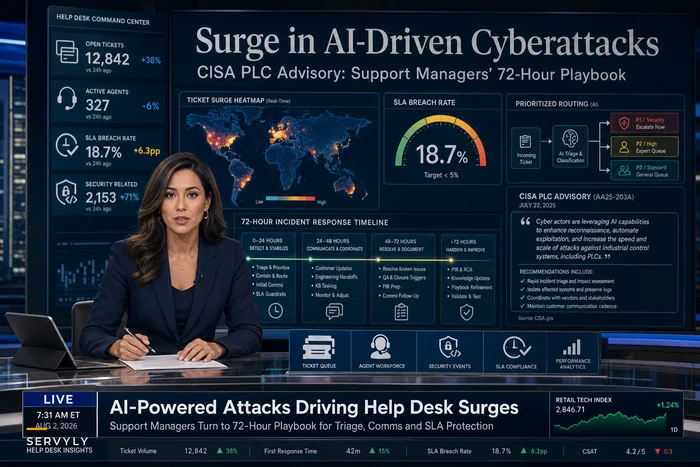
In light of recent AI‑powered ransomware activity and CISA's July 22 advisory on PLC exploitation, this post lays out a step‑by‑step operational playbook: rapid triage filters, surge routing and scheduling micro‑optimizations, incident communications and verification templates, engineering escalation packet requirements, KB task outputs, and temporary SLA guardrails to protect CSAT while security teams remediate.
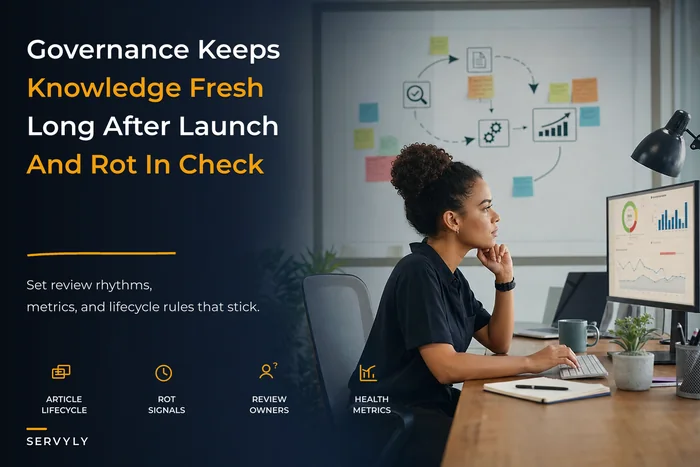
A governance-first knowledge management playbook: article lifecycle, lightweight experiments to detect knowledge rot, article health metrics and role-based review cadences for small-to-midsize support teams.

An operational framework mapping SLA→SLO by customer segment with error budgets, automated breach signals and time‑boxed remediation runbooks that tie into routing and triage rules.

A prescriptive dashboard design that prioritizes leading indicators (search decline, reopen ratios, routing churn), defines threshold alerts and ties each signal to an ownerable playbook and experiment hook.
A policy-first experiment guardrail: measurement windows, human-in-the-loop thresholds, rollback scripts and audit trails specific to automated replies and workflows in support.