

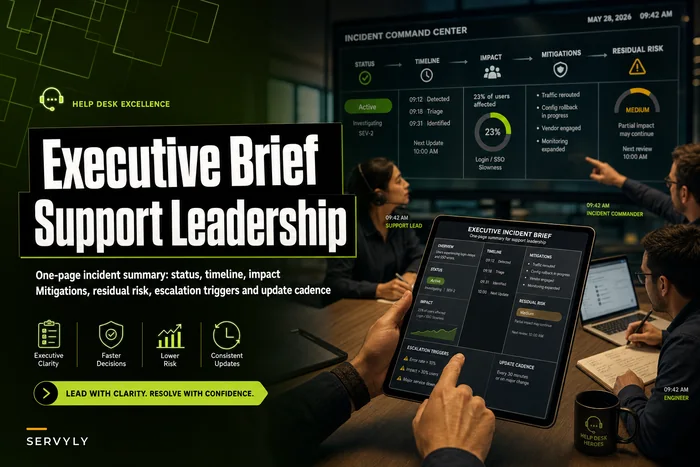
Executive Incident Brief Template for Support Leadership
One‑page executive brief (timeline, impact, mitigations, residual risk) plus escalation triggers and board‑readiness wording — focused on rapid, consistent exec updates and trust preservation.

Actionable strategies for optimizing customer support workflows, improving ticket resolution, enhancing team productivity, leveraging AI automation, and driving superior service outcomes for help desk professionals.
One‑page executive brief (timeline, impact, mitigations, residual risk) plus escalation triggers and board‑readiness wording — focused on rapid, consistent exec updates and trust preservation.
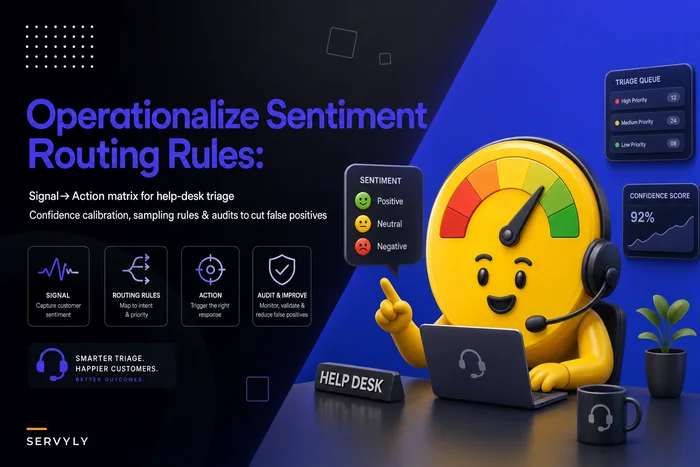
Concrete signal→action matrix (sentiment × tier × issue → routing action), confidence calibration, sampling rules and audit examples to reduce false positives and operationalize emotional signals in triage.
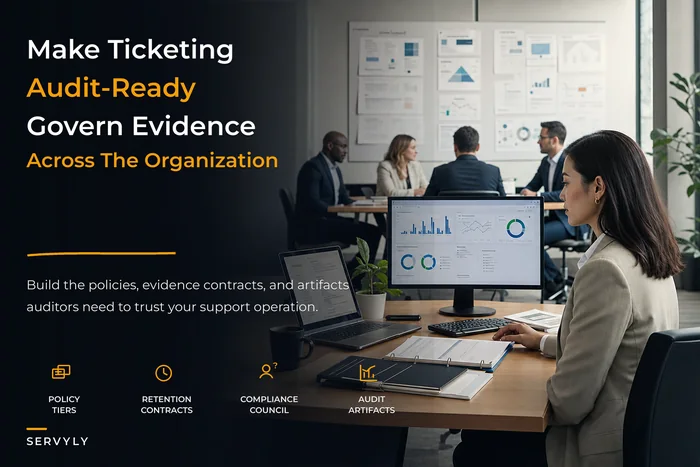
Organization-level operating model (policy tiers, evidence contracts, compliance council) that makes ticketing audit-ready with runbook templates, retention contracts and a library of audit artifacts for cross-functional governance.
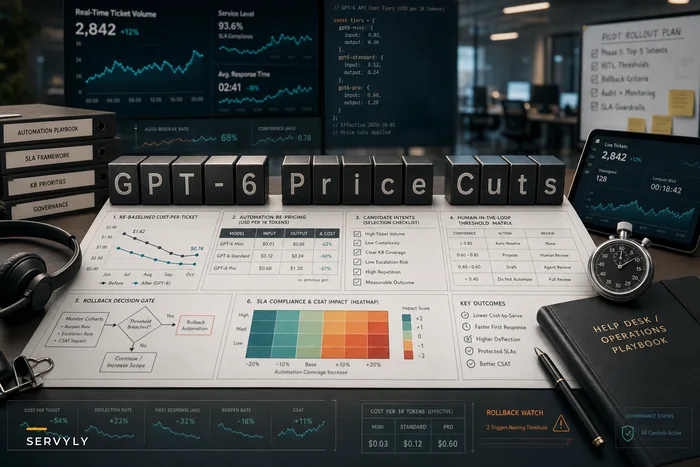
A concise operational playbook explaining how to re-evaluate AI cost models, expand safe pilots, update automation governance (human‑in‑the‑loop thresholds, rollback criteria, audit trails), and adjust SLA/scheduling and KB priorities so teams can capture cost savings without increasing risk to CSAT or SLA compliance.
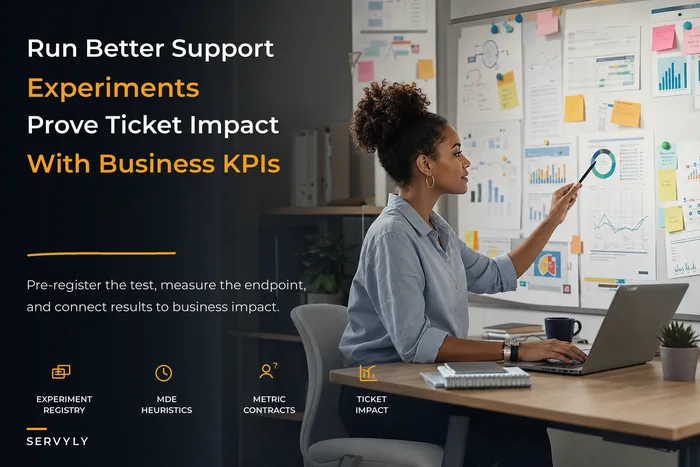
Institutionalize experiments for support: registry, pre-registration, MDE heuristics, metric contracts and cadence tied explicitly to ticket-deflection and business KPIs with templates and reproducible playbooks.
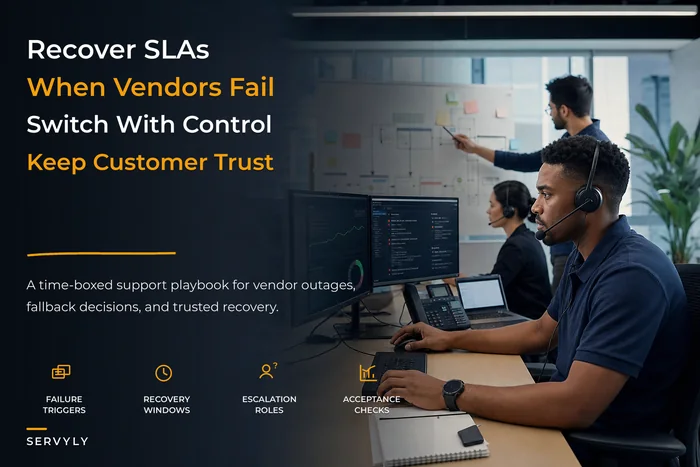
A board-friendly resilience framework linking risk registers to time-boxed runbooks: fallback rules (in-house vs partner), parallel-run acceptance criteria, recovery-time SLAs for support, customer-communication templates, and playbooks to preserve SLAs and trust during vendor failure or outages.
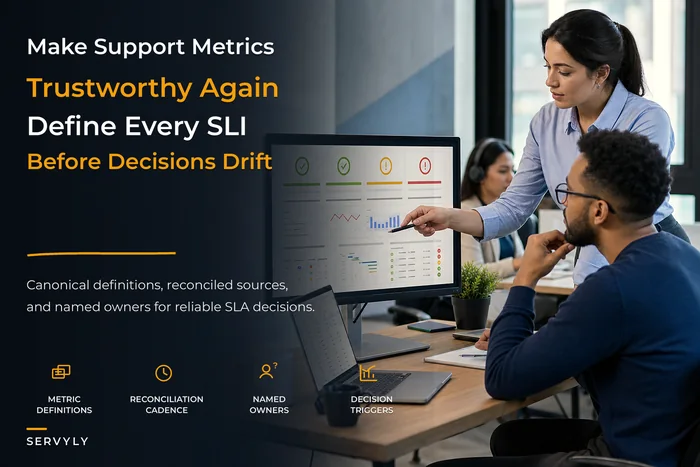
A metric-contract playbook with canonical definitions, acceptable data sources, reconciliation cadence, ownerable contracts and lightweight enforcement: includes metric-contract templates, reconciliation checklists, dispute-resolution rules and sample dashboards so SLIs/SLAs reliably trigger cross-functional decisions.
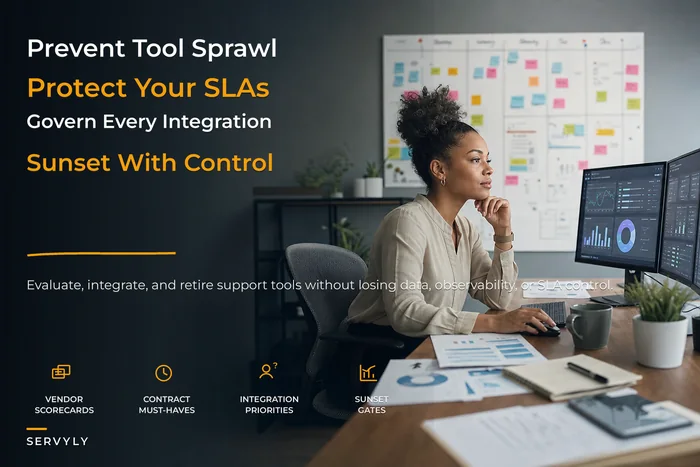
A governance-first playbook for selecting, integrating and sunsetting support tools: vendor evaluation scorecards, integration-priority matrix, contract must-haves, data/observability requirements, automation compatibility checks, and a time-boxed sunset checklist with acceptance gates to protect SLAs and avoid long-term tool sprawl.
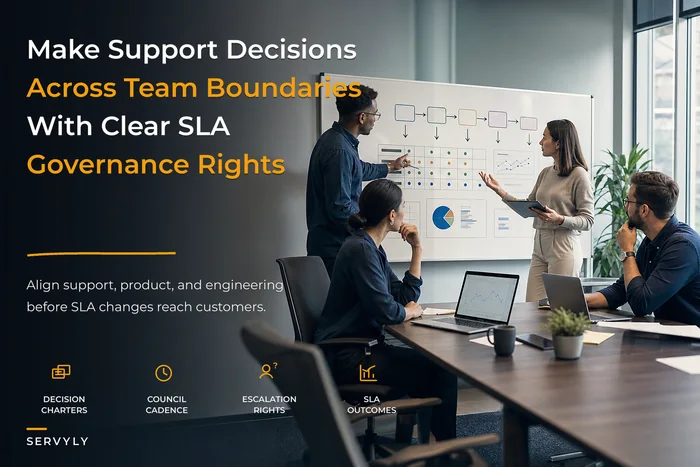
A support‑specific governance blueprint: charters, meeting cadences, escalation‑rights matrix and templates that align support SLAs/SLOs and routing with product/engineering decision cycles.